Why Beauty Fails: What Kyoto Spring Revealed About Spatial Coherence
bilateral · recursive
Kyoto in spring is one of the most overdetermined environments in the world.
Everything arrives already loaded: centuries of architecture, ritual continuity, collective expectation, cherry blossoms timed almost too perfectly for desire. It is the kind of place people travel across continents to feel something in.
That is precisely why it became useful.
This spring was the first time my fieldwork produced enough density within a single spatial category to expose a structural problem in my own assumptions. Until now, I had treated cultural density and perceptual recruitment as strongly correlated. Kyoto made clear they are not.
This matters because the entire premise of SDIndex is that embodied spatial experience can be structured before interpretation. But structure is only meaningful if it survives contradiction.
Kyoto produced contradiction everywhere.
Some of the highest-value cultural sites in the corpus failed to generate the kind of bodily alignment that supports temporal depth. Other sites, less symbolically loaded, produced far stronger perceptual coherence.
The difference was not aesthetic quality. It was continuity.
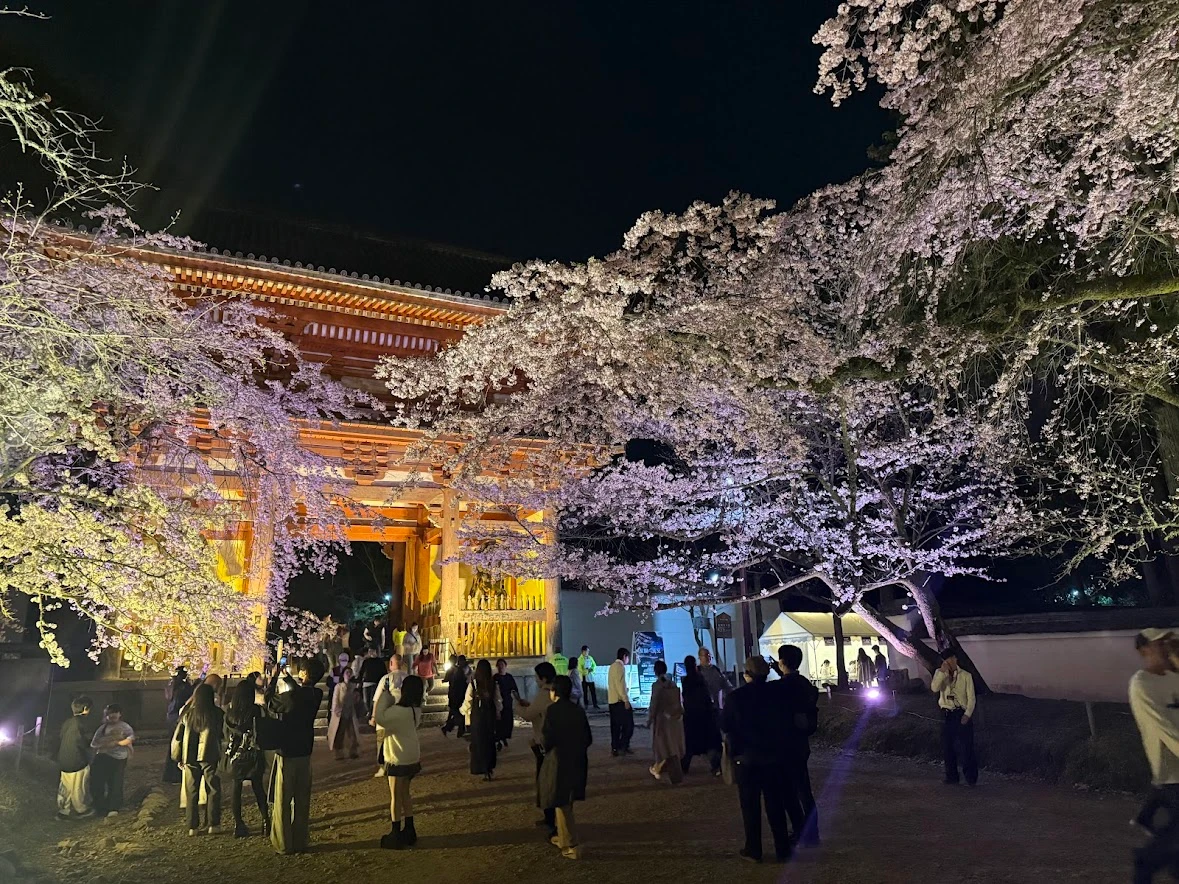
At Daigoji Temple during peak bloom, the material density was extreme: architectural heritage, seasonal timing, visual spectacle. Yet the experience never consolidated. Threshold friction, crowd pacing, and poor sequence management disrupted bodily settling before the core spatial event began. The failure was not visual. It was procedural.
At Daikakuji, by contrast, nothing announced itself dramatically. What emerged instead was gradual recruitment: threshold after threshold aligning light, scale, silence, and pacing until temporal awareness loosened without force.
This distinction is more important than beauty.
A space does not become memorable because it is culturally important or visually rich. It becomes memorable when enough sensory variables converge to lower resistance between body and environment.
Kyoto made visible that what appears dense is not always what reaches the body.
That is not a disappointment. It is a methodological correction.